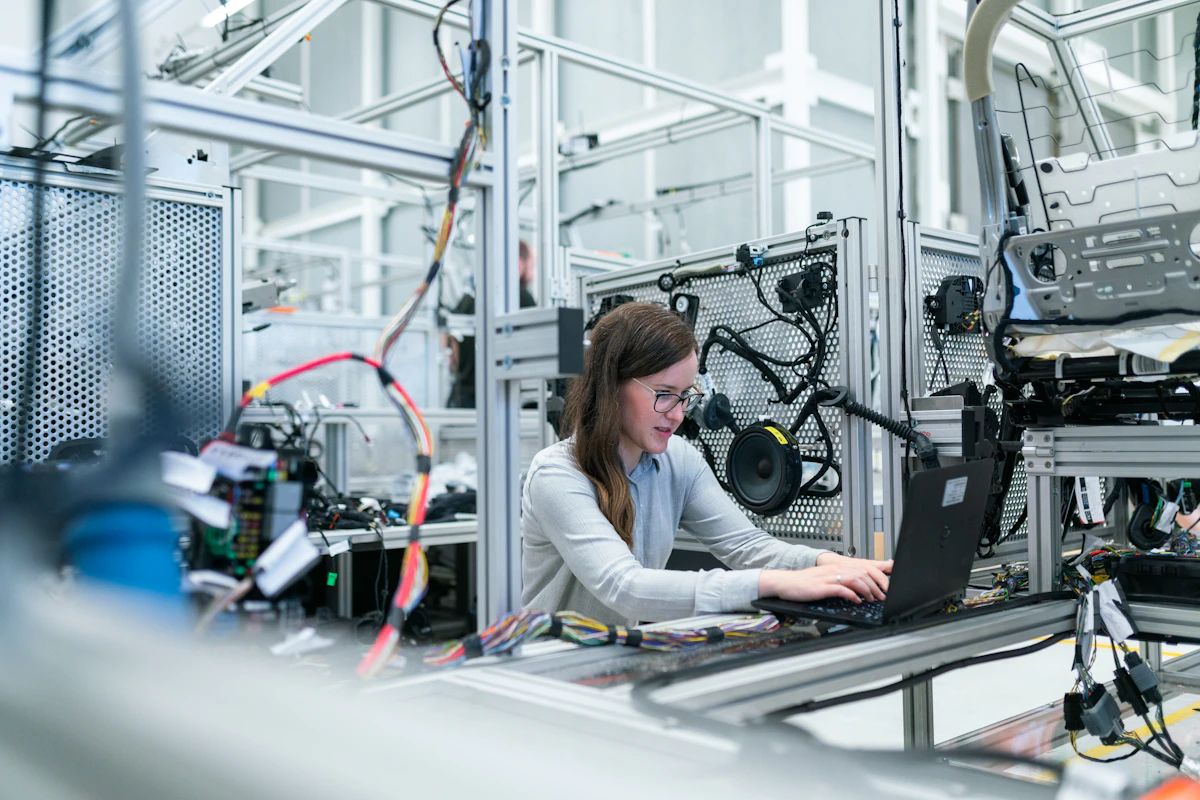
We have officially entered an era where Artificial Intelligence (AI) and Robotics are no longer confined to science fiction movies or high-level academic research. In 2026, these transformative technologies form the backbone of India's rapid industrial, economic, and digital evolution. From intelligent supply chains and autonomous drone deliveries in agriculture to AI-driven healthcare diagnostics and smart city infrastructure, the demand for skilled, certified professionals has never been more urgent.
If you are a student evaluating your career path, an IT professional looking to upskill, or a business leader planning to implement automation, understanding the educational landscape of AI and Robotics in India is your crucial first step. The gap between legacy education and modern industry requirements is massive, making specialized training an absolute necessity rather than a luxury.
This highly detailed guide provides a complete overview of the best training courses, curriculum expectations, technological prerequisites, and career trajectories available in India today.
The 2026 AI and Robotics Market in India
Before diving into the specific courses, it is important to understand why this sector is experiencing such explosive growth. The Indian government, alongside massive investments from private tech conglomerates and venture capital firms, has positioned India as a global hub for AI innovation and automated manufacturing.
Why Pursue AI and Robotics Training Now?
Choosing to undergo rigorous training in artificial intelligence, machine learning, and robotics offers unparalleled advantages in the current macroeconomic climate:
- Future-Proofing Your Career: As automation takes over repetitive tasks across finance, HR, logistics, and manufacturing, the humans designing, programming, and maintaining these intelligent systems will enjoy maximum job security.
- Incredible Earning Potential: Due to a massive supply-demand gap for specialized tech talent in India, starting salaries for Machine Learning Engineers and Robotics Programmers are currently 2x to 3x higher than standard software engineering roles.
- Diverse Industry Application: AI is not limited to traditional "tech" companies. You can build a career in Agritech, Healthtech, FinTech, EdTech, or even modern entertainment and digital media.
Types of AI and Robotics Courses Available in India
The educational ecosystem in India has rapidly adapted to serve different types of learners, from complete beginners to advanced data scientists. Here are the primary pathways you can take:
1. University Degree Programs (B.Tech / M.Tech)
For high school graduates, traditional 4-year B.Tech programs in Computer Science with a specialization in AI & Machine Learning, or a dedicated B.Tech in Mechatronics and Robotics, are highly recommended. These provide a deep mathematical foundation (Linear Algebra, Calculus, Statistics) alongside necessary hardware integration knowledge.
2. Post-Graduate Diplomas (PGP) and Executive Certifications
Institutes like the IIITs and IITs, often in collaboration with top EdTech platforms, offer intensive 9-to-12-month Post Graduate Programs. These are heavily industry-aligned, focusing on real-world projects and capstones rather than pure academic theory. They are perfectly designed for working IT professionals looking to pivot into AI without spending 2 years on an M.Tech.
3. Professional Online Bootcamps
Bootcamps are 3-to-6-month intensive, highly practical training sessions. They are coding-heavy, skipping deep theoretical math to teach you exactly how to build neural networks, deploy machine learning models to the cloud, or program robotic arms using current industry software (like ROS).
4. Corporate Training and Upskilling Solutions
Many forward-thinking Indian enterprises are organizing localized, custom training modules for their existing workforce. The goal is to train internal staff to integrate AI into their specific company operations, from automated customer service bots to predictive supply chain analytics.
Key Curriculum: What Exactly Will You Learn?
A high-quality course will strike a delicate balance between software engineering, advanced mathematics, and (if studying robotics) hardware integration. Expect to encounter the following core modules:
- Programming Foundations: Absolute mastery of Python, C++, and sometimes R. Python remains the undisputed king of the AI ecosystem due to its massive library support.
- Machine Learning & Deep Learning: Understanding core algorithms, supervised vs. unsupervised learning, and building complex Neural Networks using industry-standard frameworks like TensorFlow, Keras, and PyTorch.
- Natural Language Processing (NLP): Teaching machines to understand, interpret, and generate human language. This is the underlying technology behind transformative tools like ChatGPT and Gemini.
- Computer Vision: Training systems to interpret and make split-second decisions based on digital images or live video feeds (essential for autonomous vehicles, medical imaging, and facial recognition).
- Robotics Specifics: Kinematics, Dynamics, Sensor Integration (LiDAR, Ultrasonic), Actuators, and mastery of the Robot Operating System (ROS).
Top Institutes and Platforms in India
When selecting a course, the credibility of the institution plays a massive role in future placements. Some of the most respected entities offering AI and Robotics training include:
Premier Institutes: IIT Madras, IIT Bombay, IIT Kharagpur, and IIIT Hyderabad lead the country in cutting-edge AI research, offering both degree programs and highly coveted executive certifications.
Private Universities: Institutions like BITS Pilani, VIT, and SRM University have invested millions in robust, state-of-the-art robotics labs and established modern AI curriculums.
Government & Specialized Tech Hubs: CDAC (Centre for Development of Advanced Computing) offers highly respected, rigorous diploma courses in Artificial Intelligence across various Indian tech hubs.
Career Opportunities and Salary Expectations
The culmination of this rigorous training leads to some of the most lucrative and intellectually stimulating roles in the Indian tech ecosystem. As of 2026, the roles and compensations are highly competitive:
- Machine Learning Engineer: Designing self-running artificial intelligence systems and predictive models. Average Salary: ₹8L - ₹25L+ per annum.
- Robotics Engineer / Programmer: Designing and writing the code that controls physical robotic hardware, primarily in manufacturing, healthcare, and logistics. Average Salary: ₹7L - ₹20L+ per annum.
- Data Scientist: Analyzing massive, unstructured datasets to extract actionable business intelligence. Average Salary: ₹10L - ₹30L+ per annum.
- AI Prompt Engineer / AI Architect: A highly specialized newer role focused on designing the overarching strategy and specific syntax inputs for large language models to ensure optimal output. Average Salary: ₹12L - ₹35L+ per annum.
How to Choose the Right Course for You
With thousands of options available, making the right choice requires careful evaluation of your own background and goals:
- Assess Your Current Base: If you are weak in mathematics, do not jump straight into complex Deep Learning. Find a course that offers a "bridge" module in statistics, probability, and linear algebra.
- Check for Practical Exposure: AI cannot be learned purely through video lectures. Ensure the course offers massive datasets to work with, portfolio-building capstone projects, and cloud-computing credits (AWS/GCP/Azure) to actually train your models.
- Evaluate the Faculty: Are the instructors purely academicians or active industry practitioners? You want to learn from professionals who are currently deploying AI models in the real corporate world.
- Verify Placement Assistance: Does the institute have a dedicated hiring network? Look for transparent placement reports and message alumni on LinkedIn to verify their claims.
The Final Verdict
The AI and robotics wave is fundamentally reshaping India’s economic landscape at an unprecedented speed. Investing in your education in these advanced fields is no longer a risk; it is an absolute necessity for those who wish to remain relevant, employable, and highly paid in the modern digital age.
By carefully selecting the right training program, dedicating yourself to continuous hands-on coding practice, and building a robust, verifiable portfolio of projects, you can position yourself at the very forefront of the 2026 technology revolution. The future is automated—make sure you are the one writing the code.
